
Looking at digital products to sell online? Before you drop $100+ on courses, inventory, or platforms, here are 10 critical facts that separate profitable sellers from the ones who waste money.
1. Most "Premium" Digital Products Are Overpriced: Here's What You Actually Need
Digital product sellers love charging $97, $197, or even $997 for "premium" packages. The reality? You can access professional-grade digital products for under $10.
Ebooks start at $6.97. Video courses cost $7.95. Both include resell rights, meaning you can sell them and keep 100% of the profit. Check the full catalog at Ezy Learning's shop before spending on expensive alternatives.
2. Resell Rights Vs. PLR: This Changes Everything
Not all digital product licenses work the same way. Private Label Rights (PLR) let you edit and rebrand content. Master Resell Rights (MRR) let you sell the product as-is and keep all revenue.
Master Resell Rights products eliminate content creation time. You skip writing, filming, and editing: straight to selling. This matters when you're starting with limited capital. Spending $100+ on a single PLR product makes no sense when MRR options exist for under $10.
3. Platform Costs Eat Into Profit: Do The Math First
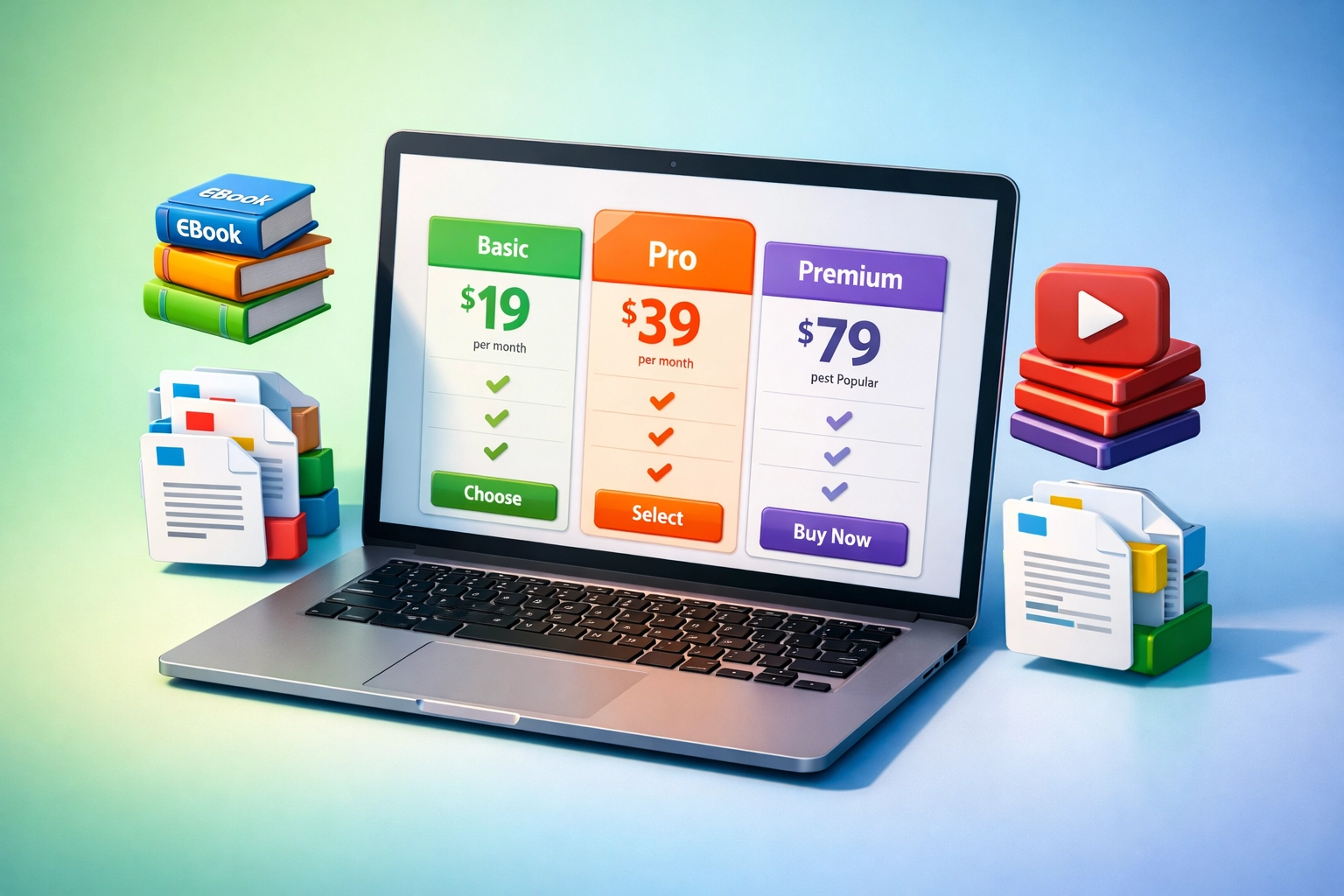
Shopify charges $39/month minimum. WooCommerce requires hosting at $10-30/month. Etsy takes 6.5% transaction fees plus listing fees. Before investing in inventory, calculate 12 months of platform costs.
Example: Shopify's basic plan costs $468 annually. You need to sell 67 products at $6.97 just to break even on the platform before earning any profit. Factor this into your $100+ spending decision.
4. Time Investment Matters More Than Product Cost
Creating original digital products takes 40-100 hours per ebook and 80-200 hours per video course. Editing, formatting, and quality control add another 20-40 hours.
At $25/hour (modest freelance rate), you're investing $1,500-6,000 in time value per product. Starting with ready-made digital products from Ezy Learning's video courses costs $7.95 and zero production time.
5. Market Research Should Cost $0: Not $100+
Skip expensive market research tools and competitor analysis subscriptions. Use free methods:
- Search Google Trends for product demand
- Check Amazon bestseller lists in your niche
- Browse Reddit communities for pain points
- Review comment sections on competitor YouTube videos
- Analyze free keyword tools like Google Keyword Planner
Spending $100+ on SEMrush or Ahrefs before validating demand wastes capital. Free research tells you what people actually want.
6. "Professional Quality" Doesn't Require Professional Prices
High-quality digital products don't need $500 cameras, $300 microphones, or $50/month editing software subscriptions. Smartphone cameras shoot 4K video. Free tools like Canva create professional graphics. Audacity records clean audio at zero cost.
The marketing courses at Ezy Learning demonstrate that content value matters more than production budget. Students care about results, not Hollywood-level production.
7. Bundle Strategy Increases Revenue 3x: Start Here
Selling individual products at $7-15 works. Bundling 3-5 related products at $27-47 works better. Customers perceive higher value. You earn more per transaction.
Example bundle structure:
- Core product (ebook or course)
- Complementary checklist or template
- Bonus resource guide
- Quick-start action plan
Bundle cost: Under $50 if sourcing from affordable suppliers. Revenue potential: $27-97 per sale with higher perceived value.
8. Test With 1-3 Products Before Scaling Inventory
Don't spend $100+ buying 20 different digital products upfront. Test demand with 1-3 products in a single niche. Track 30 days of sales data.
If Product A sells 15 copies and Product B sells 2 copies, you've learned which niche resonates. Scale Product A. Drop Product B. This approach prevents wasting money on untested inventory.

9. Resell Rights Products Skip The Biggest Cost: Creation
Original content creation represents the largest expense in digital products: whether measured in time or money. Resell rights eliminate this completely.
Compare costs:
- Hiring ghostwriter for 50-page ebook: $500-2,000
- Purchasing MRR ebook ready to sell: $6.97
- Hiring course creator for 10-video series: $2,000-8,000
- Purchasing MRR video course: $7.95
The math favors resell rights products when starting with limited capital. Browse options at Ezy Learning's main store to compare creation costs vs. purchase costs.
10. Your First $100 Should Cover 10-15 Products, Not 1-2
Budget allocation matters. Spending $100 on a single "premium" course leaves you with one product to sell. Spending $100 on 10-15 affordable resell rights products gives you inventory diversity.
More products mean:
- Multiple niches to test
- Bundle opportunities
- Higher traffic from varied keywords
- Reduced risk if one product underperforms
Start with volume at accessible prices. Scale based on performance data. This strategy protects your initial investment while maximizing testing opportunities.

What To Do With Your First $100
Recommended allocation for starting digital product sellers:
- $50-60: Purchase 7-8 resell rights products across 2-3 niches
- $20-30: Platform costs (hosting or marketplace fees for first month)
- $10-15: Basic marketing tools (email service or social media scheduling)
- $10-15: Reserve for testing paid traffic or promotions
This distribution provides inventory, infrastructure, and marketing capability without overcommitting to unproven products or expensive platforms.
Start With Proven Products Under $10
The fastest path from $100 investment to profitable digital product business runs through low-cost, high-quality inventory with resell rights. Skip overpriced courses. Avoid expensive platforms initially. Test demand before scaling.
Ezy Learning offers ebooks at $6.97 and video courses at $7.95: both with full resell rights. Browse the complete product catalog to build your initial inventory within budget.
Your first $100 either buys one expensive product with uncertain demand or builds a diverse inventory with tested profit potential. Choose volume and flexibility over premium pricing and limited options.